Diwali Cleaning Guide for Toronto and Brampton Homes
Diwali falls on November 8 this year, which means the cleaning starts in October. Scrubishly shares a three week timeline built for GTA households, plus how to clean brass and silver puja items, deal with diya soot and oil, and clear rangoli without staining your porch.

Diwali falls on Sunday, November 8 this year, with the five days running from Dhanteras on Friday November 6 through to Bhai Dooj on Tuesday November 10.
Which means the cleaning starts now.
For anyone who grew up with this, none of that needs explaining. The house gets cleaned before Diwali, properly and completely, because Lakshmi is welcomed into a home that has been prepared for her. It is not a chore attached to the festival. It is the beginning of it.
What is harder is doing it in a Toronto November, in a house you also have to heat, while working full time, with guests coming and mithai to make. So this guide is about the practical side: a realistic timeline, what to prioritise, and how to handle the specific messes that this festival makes.
Your Diwali 2026 Timeline
Work backwards from Dhanteras on November 6, not from the main day. Traditionally the house should be clean and ready before the festival begins, not partway through it.
Three weeks before, mid October: the deep clean, the decluttering, and anything that needs drying time
Two weeks before, late October: the kitchen, before the cooking starts
One week before, early November: the rooms guests will see, the puja space, and the brass and silver
The day before Dhanteras: the entrance, the rangoli, and the final touches
That spread matters. Trying to do all of it in the week before, while also cooking, shopping and preparing for guests, is how people end up exhausted by the time the festival actually starts.
Three Weeks Before: The Real Deep Clean
Mid October, while nothing else is competing for your weekends.
Book Anything You Are Outsourcing Now
If you plan to bring in help, book it in early October. Across the GTA, the two weeks before Diwali are among the busiest of the entire year for cleaning companies, particularly in Brampton, Markham, Scarborough and Mississauga. Availability in that window disappears early.
Declutter Before You Clean
This comes first, and it is the part with the most meaning behind it. Clearing out what is old, broken or unused is not just about tidiness. It is the point.
Go room by room. Anything broken goes out. Anything unused and still good gets donated, which many families do specifically in the weeks before Diwali. Clothes nobody wears, kitchen items that never come out of the cupboard, paperwork that has been piling up.
Do this before you clean, or you will clean around things that are about to leave anyway.
Carpets, Curtains and Upholstery
These need drying time, so they go early.
Curtains hold an enormous amount of dust and almost never get washed. Carpets and rugs need proper cleaning rather than a vacuum. Sofas need vacuuming into the seams and under the cushions, since a lot of people will be sitting on them over five days.
Windows and Light Fixtures
Diwali is a festival of light, and it is worth cleaning the things that carry it.
Wash the windows inside and out. November light in Toronto is low and shows every streak, and you are about to have diyas and lamps lit against those windows every evening.
Clean the light fixtures, chandeliers and lampshades. Dust on a lampshade dims the whole room, and this is the one week of the year you actually notice it.
The Ceiling Corners, Fans and Tops of Things
The traditional deep clean covers the places that never get touched. Ceiling corners, fan blades, the tops of cupboards and door frames, behind the furniture, under the beds.
Work top to bottom, always, so that anything you dislodge falls onto something you have not cleaned yet.
Two Weeks Before: The Kitchen
Late October. Your kitchen is about to do more work in ten days than it does in three months, so it needs to start clean.
Degrease Before the Cooking Starts, Not After
Mithai making means deep frying, and deep frying means oil in the air. That oil settles on the walls, the ceiling above the stove, the range hood, the cupboard doors and the light fixture over the kitchen.
It is much easier to remove old grease before you add new grease on top of it.
- Soak the range hood filter in hot water with dish soap, which does most of the work without scrubbing
- Wipe down the walls and backsplash around the stove, and check the ceiling directly above it
- Clean the cupboard doors near the stove, particularly the handles
- Degrease the light fixture over the cooking area
Everything Else in the Kitchen
- Clear out the fridge completely, because you will need every shelf
- Clean the oven, which needs hours and good ventilation, so do it now rather than in the middle of festival week
- Run a cleaning cycle on the dishwasher and clear the filter
- Descale the kettle, since GTA water leaves mineral buildup quickly
- Wash and put out the serving dishes you only use for occasions, which will need a rinse after a year in the cupboard
- Sort your storage containers now, because you are about to need a lot of them for sweets
One Week Before: The Puja Space, Brass and Silver
Early November. This is the week for the things that carry meaning rather than just dirt.
The Mandir or Puja Space
This gets cleaned last and most carefully, and many families do it on its own rather than as part of a general sweep.
Remove everything first. Dust the shelf or cabinet thoroughly, wipe it down, and let it dry completely before anything goes back. Wash any cloth, and replace it if it is worn. Clean the frames and idols gently, following whatever your family has always done, since practice varies a great deal between households and regions.
Cleaning Brass
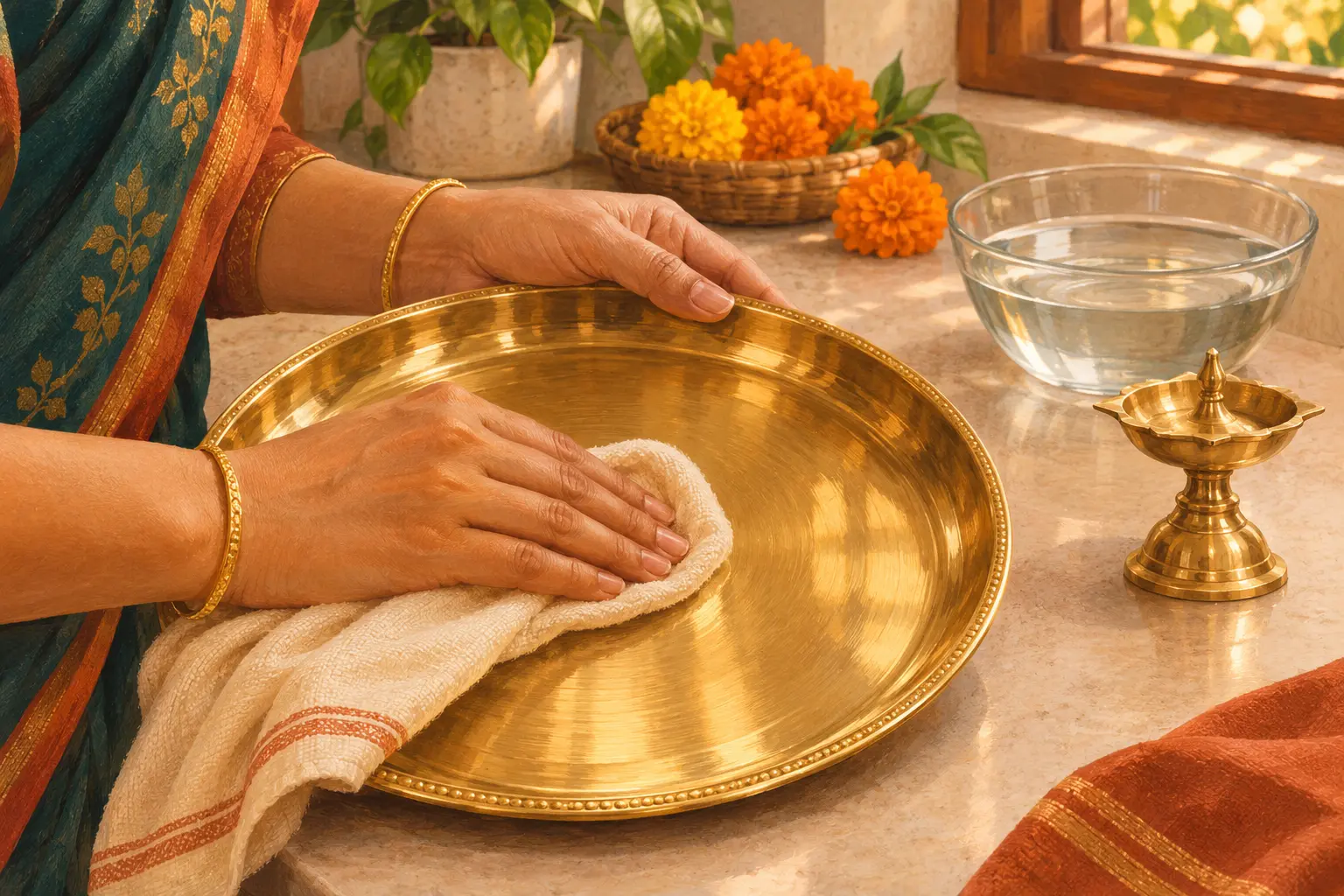
Brass puja items, diyas, thalis and lamps tarnish over a year in a cupboard.
The traditional methods work well. A cut lemon dipped in salt, rubbed over the surface, then rinsed. Or a paste of tamarind and a little water. Or, if you prefer a mix from the cupboard, equal parts flour, salt and white vinegar made into a paste, left on for ten minutes, then rinsed.
Two rules with all of them. Rinse thoroughly, since any acid left on brass will keep working and cause damage. And dry completely with a soft cloth, because water spots on brass are their own problem.
One warning: if the brass is lacquered, meaning it has a clear protective coating, do not use any of these. Acid will strip the lacquer and leave it patchy. Lacquered brass just needs warm soapy water and a dry cloth.
Cleaning Silver
A paste of baking soda and a little water, applied with a soft cloth and rubbed gently, lifts most tarnish.
For heavily tarnished pieces, line a bowl with aluminium foil, add hot water, a few tablespoons of baking soda and a little salt, and let the silver sit in it. The tarnish transfers to the foil. It works remarkably well and takes minutes.
Do not use this method on silver with stones, pearls or an intentionally darkened antique finish, since it will strip the finish along with the tarnish. Rinse and dry completely afterwards.
The Rooms Guests Will Use
Five days of visitors means the bathroom, the entrance and the living areas take real traffic.
- Full bathroom clean, including behind and around the toilet base, the grout and the exhaust fan cover
- Descale the taps and shower head
- Fresh towels out, and a plan for where guest things go
- Living room dusted, upholstery vacuumed, cushion covers washed
- Every flat surface cleared, because you are about to need them for lamps, sweets and decorations
The Entrance
The threshold matters more at Diwali than at any other time, because it is where the rangoli goes and where Lakshmi is welcomed.
Clean it properly. Sweep and wash the porch and steps, wipe the front door on both sides, clean the frame and handle, and wash the doormats.
If you are hanging a toran, dust the door frame first, because you will not be able to reach behind it afterwards.
A Note About Rangoli in a Toronto November
Rangoli outdoors in the GTA in November is a gamble. Early November can bring rain, wind or an early snowfall, and coloured powder does not survive any of them.
A few things that help. Sweep and dry the surface completely first, since powder on a damp porch immediately becomes paste. Consider doing the rangoli just inside the door instead, which many families here have moved to. Or use a mat or board as a base, so it can be lifted rather than swept off a porous surface.
If you do it directly on concrete, know that some rangoli colours will stain it, particularly the deeper reds and oranges, and particularly if they get wet before you remove them.
Diyas Without the Damage
Oil lamps are the heart of the festival and they leave three kinds of mess.
Oil residue. Set diyas on a tray, a thali or a piece of foil rather than directly on wood, marble or fabric. Oil soaks into porous stone and wood and it is genuinely difficult to remove afterwards. This one step prevents most of the problem.
Wax and hardened oil. Let it harden fully, then scrape gently with something blunt and non metal. On clay diyas, soak them in warm soapy water afterwards and let them dry completely before storing.
Soot. Lamps and candles against a wall leave black marks above them. The rule here is important and counterintuitive: do not use water first. Wet soot smears and drives the carbon into the paint, turning a small mark into a large one.
Use a dry sponge or a soft dry cloth first and lift as much as you can. Only then, if a shadow remains, follow with a barely damp cloth and a small amount of mild soap, working gently.
Keeping lamps a few inches away from the wall prevents almost all of it.
Fireworks, Balconies and Condo Rules
Worth checking rather than assuming, because the rules differ across the GTA and they differ again if you live in a condo.
Municipal fireworks rules vary between Toronto, Brampton, Mississauga and Markham, and several have specific provisions for Diwali while others do not. Check your own municipality's website rather than going by what a neighbour did last year.
If you live in a condo, most buildings prohibit open flames on balconies entirely, which includes diyas. Battery operated diyas have become common for exactly this reason and they look better than they used to. They also solve the soot and oil problem completely.
If you are lighting real diyas indoors in a condo, be aware that a large number of open flames in a sealed unit with the heating on can set off a smoke detector, which in most buildings alerts the entire floor.
After Diwali: The Cleanup
The five days end and there is work to do. In this order.
Rangoli powder. Sweep it dry, completely, before any water touches it. Wet powder becomes a paste that stains concrete and grout. Sweep first, then wash.
Diyas and lamps. Let them cool and harden fully, scrape, then soak. Store them dry, because damp clay in a box for a year does not end well.
Oil marks on floors. Warm water with dish soap, since soap is designed for grease. On stone or unsealed surfaces, act quickly, because oil soaks in.
Soot marks. Dry first, always. See above.
The kitchen, again. After a week of frying, the range hood filter needs another soak and the walls near the stove need another wipe. Grease that sits hardens and gets much harder to remove.
Fabric. Table cloths, cushion covers, the good curtains if anything splashed. Oil stains on fabric need dish soap worked in directly, or cornstarch left on for fifteen minutes to draw the oil out first.
Sweets and containers. Sugar residue attracts ants and it is sticky in a way that spreads. Wipe the counters properly, and check inside the cupboards where the mithai boxes sat.
Frequently Asked Questions
When should I start cleaning for Diwali 2026?
About three weeks before, which is mid October, since Diwali falls on November 8 and the festival begins with Dhanteras on November 6. Traditionally the house should be clean and ready before the five days begin, not during them.
Why do we clean the house before Diwali?
Cleaning and decluttering the home before Diwali is part of welcoming Lakshmi, the goddess of wealth and prosperity, who is said to enter homes that are clean and prepared. Clearing out what is old or unused is as much a part of it as the cleaning itself.
How do you clean brass diyas and puja items?
Rub with a cut lemon dipped in salt, or use a tamarind paste, or a paste of equal parts flour, salt and white vinegar. Rinse thoroughly and dry completely. Do not use any acidic method on lacquered brass, which only needs warm soapy water.
How do you clean tarnished silver at home?
Use a paste of baking soda and water on a soft cloth, or line a bowl with aluminium foil, add hot water with baking soda and salt, and let the silver soak so the tarnish transfers to the foil. Avoid this method on silver with stones or an antique finish.
How do you remove soot marks from diyas on a wall?
Use a dry sponge or dry cloth first. Water applied to soot smears it and drives it into the paint. Only after lifting as much as possible dry should you follow with a barely damp cloth and mild soap.
How do you clean up rangoli powder?
Sweep it up completely dry before using any water. Wet rangoli powder turns into a paste that stains concrete and grout, particularly the deeper red and orange colours.
Should I book a cleaner before Diwali?
If you plan to, book by early October. The two weeks before Diwali are one of the busiest periods of the year for cleaning companies across Brampton, Markham, Mississauga and Scarborough, and last minute availability is rare.
Book Your Pre Diwali Deep Clean
The deep clean before Diwali is a large job, and it lands in the same weeks as the shopping, the cooking and getting the house ready for five days of guests.
Scrubishly is a fully insured cleaning team serving Brampton, Markham, Scarborough, Mississauga, Toronto, North York, Etobicoke, Vaughan and Richmond Hill. A pre Diwali deep clean covers the carpets, curtains, upholstery, kitchen degreasing, windows and all the places a proper festival clean is supposed to reach, so the week before Diwali can be about cooking and family instead of scrubbing.
Our October and early November calendar fills quickly, so it is worth booking well ahead. If you would like a sense of pricing first, our guide to what house cleaning costs in Toronto covers the full range, and one time versus recurring cleaning explains which suits a one off occasion like this.
Get a free quote and book your Diwali clean online
Wishing you and your family a very happy Diwali.