.webp)
How to Remove Hard Water Stains: A Toronto Cleaning Guide
Hard water stains in your Toronto home? Learn how to remove mineral buildup from faucets, glass, and showerheads with simple methods from the Scrubishly team.
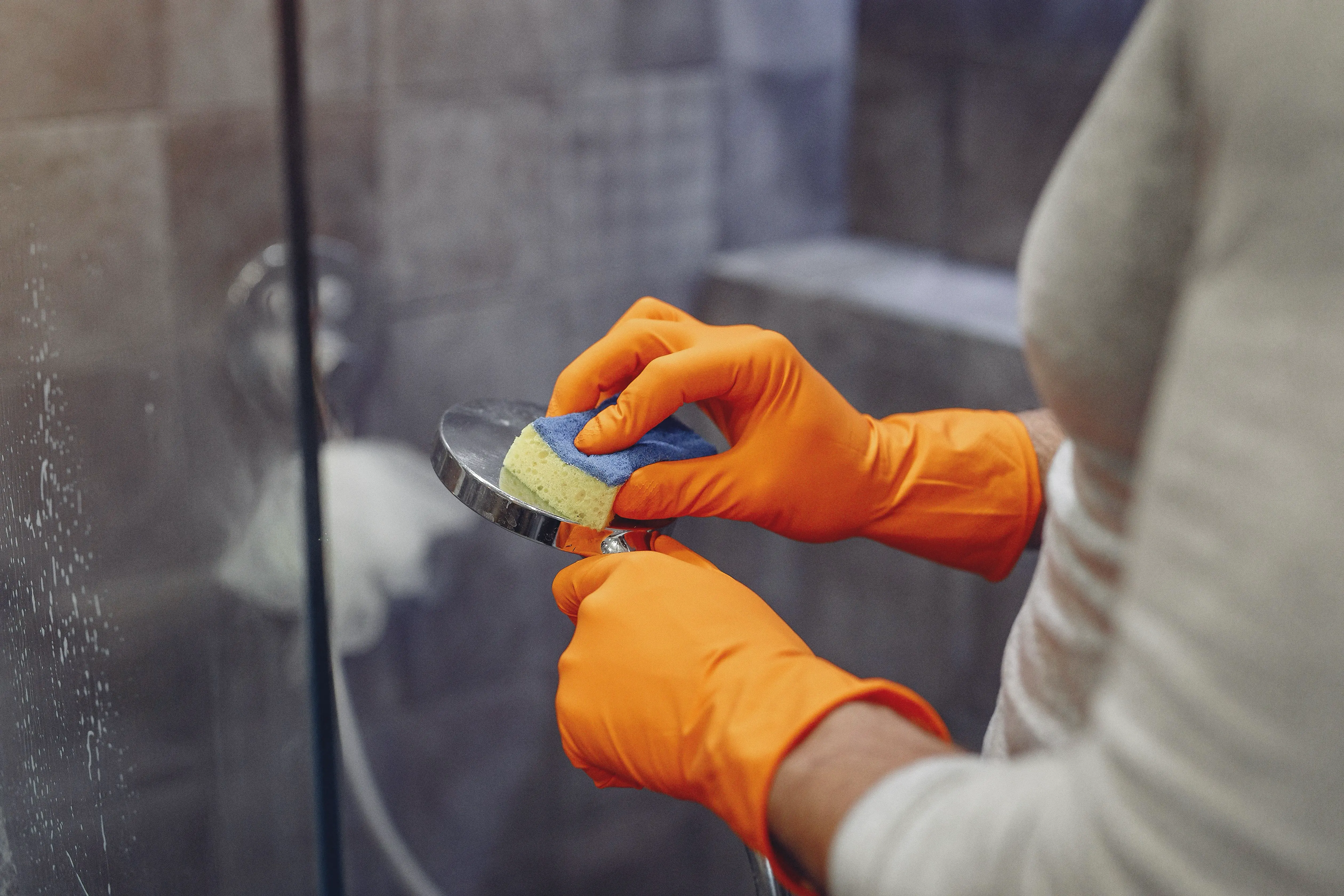
You wipe down your faucet, and a day later it's covered in those cloudy white spots again. Your glass shower door looks permanently foggy no matter how hard you scrub. Sound familiar? If you live in Toronto, you're dealing with hard water, and the mineral stains it leaves behind are one of the most common cleaning frustrations we hear about. The good news is that they're very beatable once you know what you're working with. At Scrubishly, we tackle hard water buildup in homes across the GTA every week, so here's our practical guide to getting rid of it for good.
What Causes Hard Water Stains?
Hard water is simply water with a high mineral content, mainly calcium and magnesium. These minerals are completely safe to drink, but they cause trouble the moment water sits on a surface and evaporates. When the water dries, the minerals stay behind as chalky white or cloudy deposits. Over time these deposits harden into limescale, that crusty buildup you see around faucets, showerheads, and drains.
The longer it sits, the tougher it gets to remove. A fresh spot wipes away easily. Months of built up scale needs a little more effort and the right approach, which is exactly what we'll cover.
Is Toronto's Water Actually Hard?
Yes, and now you know why your fixtures keep clouding over. Toronto draws its water from Lake Ontario, and as that water moves over the region's limestone rich bedrock, it picks up calcium and magnesium naturally. The result is water that sits at roughly 120 to 130 milligrams per litre of calcium carbonate, which is officially classified as moderately hard.
It might be called moderate, but anyone who has scrubbed a Toronto shower door knows it's hard enough to leave its mark. And if you live just outside the core, it can be worse. Several GTA communities that rely on groundwater, like Brampton and parts of Vaughan, have significantly harder water than the city itself. So whether you're downtown or in the suburbs, hard water stains are simply part of life here. The trick is staying ahead of them.
Where Hard Water Stains Show Up Most
Hard water tends to leave its mark in the same predictable places. These are the spots we always check first.
Faucets and Fixtures
Chrome and metal faucets show every water spot. You'll often see a chalky ring forming right at the base where water pools and dries.
Glass Shower Doors
This is the big one. That permanent foggy film on glass shower doors is mineral buildup, and it gets worse with every shower if it isn't dealt with regularly.
Showerheads
Limescale builds up inside and around the nozzles, which is why an older showerhead can start spraying unevenly or weakly. The minerals are literally clogging the holes.
Sinks, Tubs, and Toilets
You'll notice cloudy patches, white rings, and sometimes a stubborn ring inside the toilet bowl right at the waterline, all caused by the same mineral deposits.
Dishes and Glassware
Ever pull a glass out of the cupboard and find it cloudy even though it's clean? That spotty film is hard water residue left behind as the water dried.
How to Remove Hard Water Stains
Here's the part you came for. Most hard water stains respond beautifully to a few simple, affordable methods. The key ingredient is acid, because mild acids dissolve the mineral deposits.
White Vinegar, Your Best Friend
White vinegar is the single most effective hard water remedy we recommend, and most people already have it in the kitchen. For faucets and fixtures, soak a cloth or paper towel in vinegar, wrap it around the affected area, and leave it for thirty minutes to an hour. The vinegar dissolves the deposits so they wipe right off. For glass shower doors, spray on a vinegar and water mix, let it sit, then wipe and rinse.
Baking Soda for Tougher Spots
For stubborn buildup, make a paste of baking soda and a little water, apply it to the stain, and let it sit before scrubbing gently. For really tough areas, apply the baking soda paste first, then spray vinegar over top. It will fizz, and that reaction helps lift the deposits. Scrub with a soft brush or cloth and rinse clean.
Lemon for Light Buildup
Lemon juice is naturally acidic and works well on lighter stains, with the bonus of leaving a fresh scent. Cut a lemon in half and rub it directly on faucets and fixtures, or use bottled lemon juice on a cloth. It's a gentle, pleasant option for everyday spots.
Descaling a Showerhead
A clogged showerhead is easy to fix. Fill a plastic bag with vinegar, slip it over the showerhead so the nozzles are submerged, and secure it with an elastic band. Leave it for an hour or two, then remove it and run the water to flush out the loosened minerals. Your water pressure will thank you.
A Word on Commercial Descalers
There are plenty of store bought limescale removers that work well for heavy buildup. If you go that route, follow the directions and ventilate the room. In our experience, vinegar handles the vast majority of household hard water stains without anything stronger.
One Important Caution
Before you reach for vinegar or lemon, check your surface. Acidic cleaners should never be used on natural stone like marble, granite, or travertine, because they etch and permanently dull the finish. For natural stone counters and tile, use a cleaner made specifically for stone. This is one of those details that separates a confident clean from an expensive mistake, so when in doubt, test a small hidden area first.
How to Keep Hard Water Stains From Coming Back
Removing the stains is half the battle. Keeping them away is what saves you the scrubbing.
The simplest habit is to dry surfaces after use. Keeping a squeegee in the shower and giving the glass a quick pass after each use prevents that foggy film from ever forming. Wiping down faucets and sinks with a dry cloth does the same for fixtures.
Staying consistent matters more than working hard. A light wipe every few days never lets buildup get a foothold, which is far easier than battling months of hardened scale. And if hard water is a constant struggle in your home, some Toronto residents choose to install a water softener or filtration system to treat the problem at the source, which protects fixtures and appliances over the long run.
When to Call in the Pros
Sometimes buildup has been accumulating for so long that it feels impossible to shift, or it's spread across glass, tile, fixtures, and grout throughout the home. That's when a professional clean makes the most sense. We bring the right products and the experience to remove years of mineral deposits safely, including knowing which surfaces need gentler treatment.
At Scrubishly, hard water buildup is one of the things we handle as part of a thorough deep clean, leaving your fixtures bright, your glass clear, and your home looking refreshed.
Final Thoughts
Hard water stains are just a fact of life in Toronto, thanks to our mineral rich Lake Ontario supply. But they're far from permanent. With a bottle of white vinegar, a little baking soda, and a few good habits, you can keep faucets gleaming and shower glass clear. Just remember to protect your natural stone, stay consistent, and dry surfaces when you can. And when the buildup gets ahead of you, we're always here to help.
Tired of fighting cloudy fixtures and foggy glass? Book a clean with Scrubishly and let us bring the shine back.