.webp)
Why Your House Gets Dustier in the Fall (And What Actually Fixes It)
You clean on Saturday and there is a film on the table by Tuesday. Scrubishly explains the five reasons homes get dustier once the heating season starts, what household dust is actually made of, and the fixes that matter ranked by how much difference they make.

You clean on Saturday. By Tuesday there is a visible film on the coffee table again.
It is not your imagination and it is not that you cleaned badly. Homes genuinely do get dustier from October onward, and in a Canadian winter the effect is dramatic. The same house that stayed reasonably clear all summer suddenly needs dusting twice a week.
There are five separate reasons for it, and once you understand which ones apply to your home, the fix is far more targeted than dusting more often.
First, Dust Is Not What You Think It Is
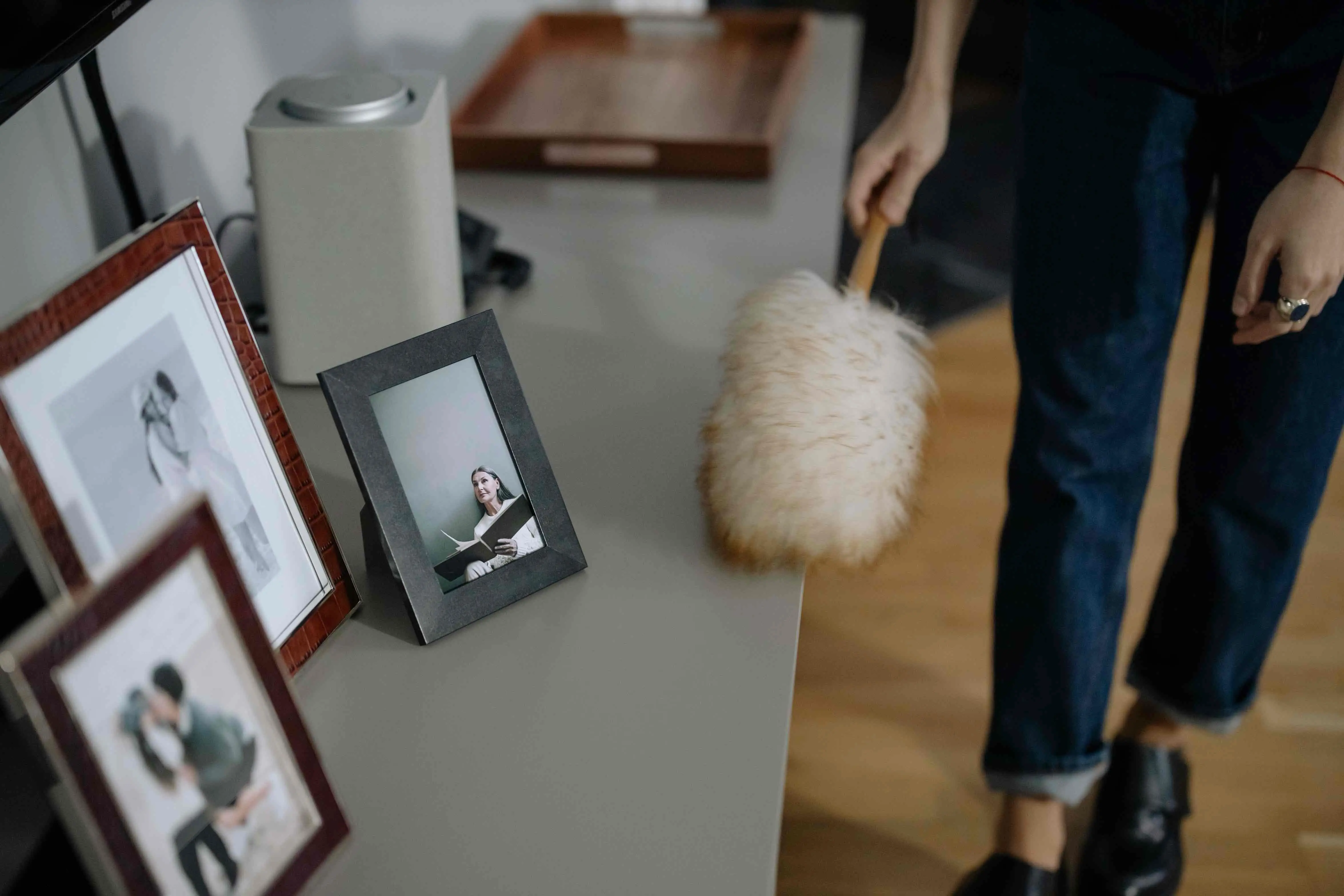
The line everyone repeats is that household dust is mostly dead skin. It is a persistent myth and it matters, because believing it sends you after the wrong problem.
The largest component of dust in most homes is fibre from textiles. Carpet, upholstery, bedding, curtains, towels, clothing. Every fabric surface in your home is slowly shedding, all the time.
The rest is a mix of soil and grit tracked in from outside, pollen, pet dander, paper fibres, cooking residue and a small amount of skin.
This changes the whole approach. If dust were mostly skin, dusting more would be the answer. Since it is mostly fabric shedding and dirt from outdoors, the answer is controlling those two sources.
Why Autumn Makes All of It Worse
Your House Stops Breathing
All summer your home ventilated itself. Open windows, doors propped, cross breezes. That airflow carried a constant, invisible amount of dust straight out of the house.
Once the cold arrives, the windows close and they stay closed until spring. Now the same dust has nowhere to go. It settles, gets disturbed, resettles, and circulates through the same sealed volume of air for six months.
Nothing about your home produces more dust in October. It just stops leaving.
Forced Air Heating Redistributes Everything
Most Toronto homes are heated by forced air, which means a fan pushing warm air through ducts into every room, several times an hour, all winter.
That system is very good at moving heat and equally good at moving dust. Anything sitting in your ducts, on your vent covers or on the floor near a register gets picked up and delivered elsewhere.
This is why the dust seems to reappear so fast. It is not new dust. It is the same dust being lifted and dropped in a different place.
If you have not changed your furnace filter or cleaned your vents before the heating season, this is the single largest thing making your house dusty, and it is also the easiest to fix.
The Air Gets Extremely Dry
This is the mechanism almost nobody knows about, and it explains more of the problem than people expect.
Cold outdoor air holds very little moisture. When it comes inside and gets heated, the relative humidity drops through the floor. A Toronto home in January often sits somewhere between fifteen and twenty five percent, which is drier than most deserts.
Dry air does two things to dust. It builds static charge, so dust clings to surfaces, screens and fabric instead of being wiped away easily. And it keeps fine particles airborne for far longer, so they drift around the house and settle on everything rather than dropping and staying put.
Dry air is also why the dust feels different in winter. It seems finer, more clingy and more stubborn, because it is.
You Bring a Lot More Fabric Into the House
Think about what changes in your home in October. Heavier duvets. Flannel sheets. Wool sweaters. Throw blankets on the sofa. Scarves, hats and mitts by the door. Heavy coats hanging in the hall instead of light jackets.
Every one of those is a shedding surface, and wool and flannel shed considerably more than the cotton and linen you had out all summer.
You have quietly increased the amount of fibre in your home by a large margin, in the same month the ventilation stopped.
What Comes In on Your Boots
Autumn brings wet leaves and mud. Winter brings grit, sand and road salt.
Grit and salt get walked across your floors, crushed underfoot into an increasingly fine powder, and then that powder gets picked up by the heating system and distributed. Road salt in particular breaks down into a very fine dust and it is abrasive, which means it also damages hardwood and grinds into carpet fibres while it is at it.
What Actually Fixes It, In Order of Impact
Not all of these are equal. The first three do most of the work.
One: Change Your Furnace Filter, and Then Keep Changing It
This is the highest impact action available to you, by a distance. Every bit of air in your home passes through this filter repeatedly, all winter.
MERV 8 to 11 suits most homes, catching dust, dander and pollen without restricting airflow. Change a standard one inch filter every one to three months through the heating season, and check it monthly by holding it up to a light. If light barely passes through, it is done.
If you have pets, halve those intervals.
Two: Get Your Humidity to Thirty to Forty Percent
This is the fix people never think of, and it does more for winter dust than any amount of extra cleaning.
Bringing indoor humidity up to a healthy range kills the static charge, which means dust stops clinging to every surface and starts behaving normally again. It also lets fine particles settle rather than drifting for hours.
Aim for thirty to forty percent in winter. Health Canada recommends thirty to fifty percent generally, but in a Canadian winter you want the lower end of that, because during a real cold snap anything above forty percent will start condensing on your windows. Persistent window condensation leads to mould on the sills and frames, which is a worse problem than dust.
A hygrometer costs very little and takes the guesswork out of it. If your furnace has a built in humidifier, check that the pad has been replaced and the water line is turned on for the season, because plenty of them sit disconnected for years without anyone noticing.
You will also sleep better, and the static shocks stop.
Three: Dust Damp, and Dust Downward
Dry dusting mostly relocates dust into the air, where it drifts around and lands somewhere else. That is why a dusted room can look worse two days later.
Use a slightly damp microfibre cloth, which traps and holds rather than pushing around. Feather dusters are close to useless for this reason and always have been.
Work top to bottom, every time. Ceiling fan, then light fixtures, then shelves and picture frames, then furniture, then baseboards, then floors. Anything you dislodge falls onto something you have not cleaned yet, which is the point.
Dust before you vacuum, never after.
Four: Vacuum Properly, Not Just Often
A vacuum without good filtration picks dust up at the floor and blows the fine particles straight back into the room through the exhaust. If your house smells dusty while you vacuum, that is what is happening.
A sealed unit with a HEPA filter genuinely matters here. Empty the canister outside, or at minimum away from the room you just cleaned, and clean or change the vacuum's own filter on schedule.
Vacuum slowly. Most people move far too fast for the machine to actually lift anything from carpet.
Five: Treat Soft Surfaces as the Source They Are
Since fabric is the biggest single contributor, this is where the sustained gains are.
- Wash bedding every one to two weeks in winter, since you are in it more and the fibres shed constantly
- Vacuum the mattress when you change the sheets
- Vacuum upholstery, including under the cushions and into the seams
- Wash or vacuum curtains, which quietly hold an enormous amount
- Wash new blankets and bedding before first use, because new textiles shed the most
- Vacuum under and behind furniture, not only the open floor
Six: Stop It at the Front Door
Everything you catch at the entryway is dust that never enters the system.
Two mats, one outside and one inside, and a strict shoes off rule from October. In a home with road salt coming in from November, this is worth more than any other single habit.
Seven: Clear Your Flat Surfaces
Dust needs somewhere to land. A shelf with eleven objects on it takes five times longer to clean than a shelf with three, so most people skip it, and it becomes a permanent reservoir that the heating system draws from all winter.
You do not have to live minimally. Just be aware that every horizontal surface with clutter on it is a place dust accumulates untouched.
Where Air Purifiers Actually Fit
They work, but they are frequently sold as the whole answer when they are a supplement.
A HEPA air purifier is genuinely effective in one room, and it is worth it in a bedroom if someone has allergies or asthma. That is eight hours a night of filtered air in the room where it matters most.
What it will not do is clean the air in your whole house. Buying one for the living room and expecting the whole home to improve is the common mistake.
If you are choosing between an air purifier and sorting out your furnace filter and humidity, do the furnace filter and humidity first. They cost a fraction as much and affect every room.
Things That Do Not Work
Feather dusters. They move dust into the air rather than removing it. A damp microfibre cloth outperforms them every time.
Dusting after vacuuming. You have just dropped everything onto a clean floor.
Dryer sheets rubbed on surfaces. A popular tip that leaves a waxy residue which attracts more dust than it repels.
Turning the heat down to reduce dust. The dust comes from the air movement and the dryness, not the temperature. You will just be cold.
Dusting more often as the only strategy. If you have not addressed the filter, the humidity or the fabric, you are removing dust after the fact rather than reducing it. That is why it feels endless.
A Realistic Winter Dust Routine
Monthly: check the furnace filter, check the humidity reading, vacuum vent covers and cold air returns.
Weekly: damp dust the main rooms top to bottom, vacuum all floors properly, wash bedding every one to two weeks.
Every few weeks: vacuum upholstery and under cushions, vacuum under furniture, wipe down baseboards, vacuum the mattress.
Once mid winter: a proper deep clean covering the places that never get touched, which is where a winter's worth of dust quietly accumulates.
When Dust Is Telling You Something Else
Occasionally heavy dust is a symptom rather than a nuisance. Worth investigating if you notice any of these.
- Dust visibly puffing out of the vents when the heat kicks on
- A sudden increase with no change in habits
- Fine grey or black dust settling near vents specifically, which can indicate a duct issue
- Dust that reappears within a day of a thorough clean
- Symptoms that get worse indoors and ease when you leave the house
That last one is the one people misread most often. Winter allergy symptoms that improve when you go outside are usually pointing at something inside the house rather than at a seasonal allergy.
Frequently Asked Questions
Why is my house so dusty in the winter?
Four things happen at once. The windows close so dust stops leaving the house, forced air heating circulates and redistributes it, the air gets very dry which creates static and keeps particles airborne, and you bring in more heavy fabric which sheds more fibre.
What is household dust actually made of?
Mostly fibre shed from textiles such as carpet, bedding, upholstery and clothing, plus soil and grit tracked in from outside, pollen, pet dander and cooking residue. The idea that it is mostly dead skin is a myth.
Does humidity affect dust in the house?
Yes, significantly. Dry winter air creates static that makes dust cling to surfaces and keeps fine particles airborne longer. Raising indoor humidity to thirty to forty percent noticeably reduces both effects.
What humidity should a house be in a Canadian winter?
Thirty to forty percent. Higher than that during a cold snap causes condensation on windows, which leads to mould around the frames and sills.
Do air purifiers help with dust?
In the room they are in, yes, particularly a HEPA model in a bedroom. They will not clean the air throughout a house, and they are less effective per dollar than simply maintaining your furnace filter.
How often should I dust in winter?
Weekly for the main rooms, using a damp microfibre cloth and working top to bottom. If you are dusting more often than that and it still reappears immediately, the problem is your furnace filter or your humidity rather than your dusting.
Should I dust or vacuum first?
Dust first, always. Dusting dislodges particles that fall to the floor, so vacuuming afterwards picks them up. Doing it the other way round means dropping dust onto a floor you just cleaned.
Reset the House Before Winter Sets In
Most of the dust in a home by January has been accumulating in places nobody reaches during a normal weekly clean. Behind the furniture, along the tops of doors and cupboards, in the upholstery seams, on the light fixtures and inside the vent covers.
Scrubishly is a fully insured cleaning team serving Toronto, North York, Etobicoke, Scarborough, Mississauga, Brampton, Markham, Vaughan and Richmond Hill. An autumn deep clean clears out those reservoirs before the house gets sealed up for six months, which makes every week after it easier. Our fall cleaning checklist covers what that involves, and you can see what it costs in Toronto before you book.
Get a free quote and book your autumn deep clean online